One of the favorite places for recreation near Gabrovo is Gradishte. Only 3 km away from the city, the area is a large meadow with a children’s playground, two restaurants, and many recreation areas. The conditions are perfect for a nature outing and sporting outdoor activities with children and friends.
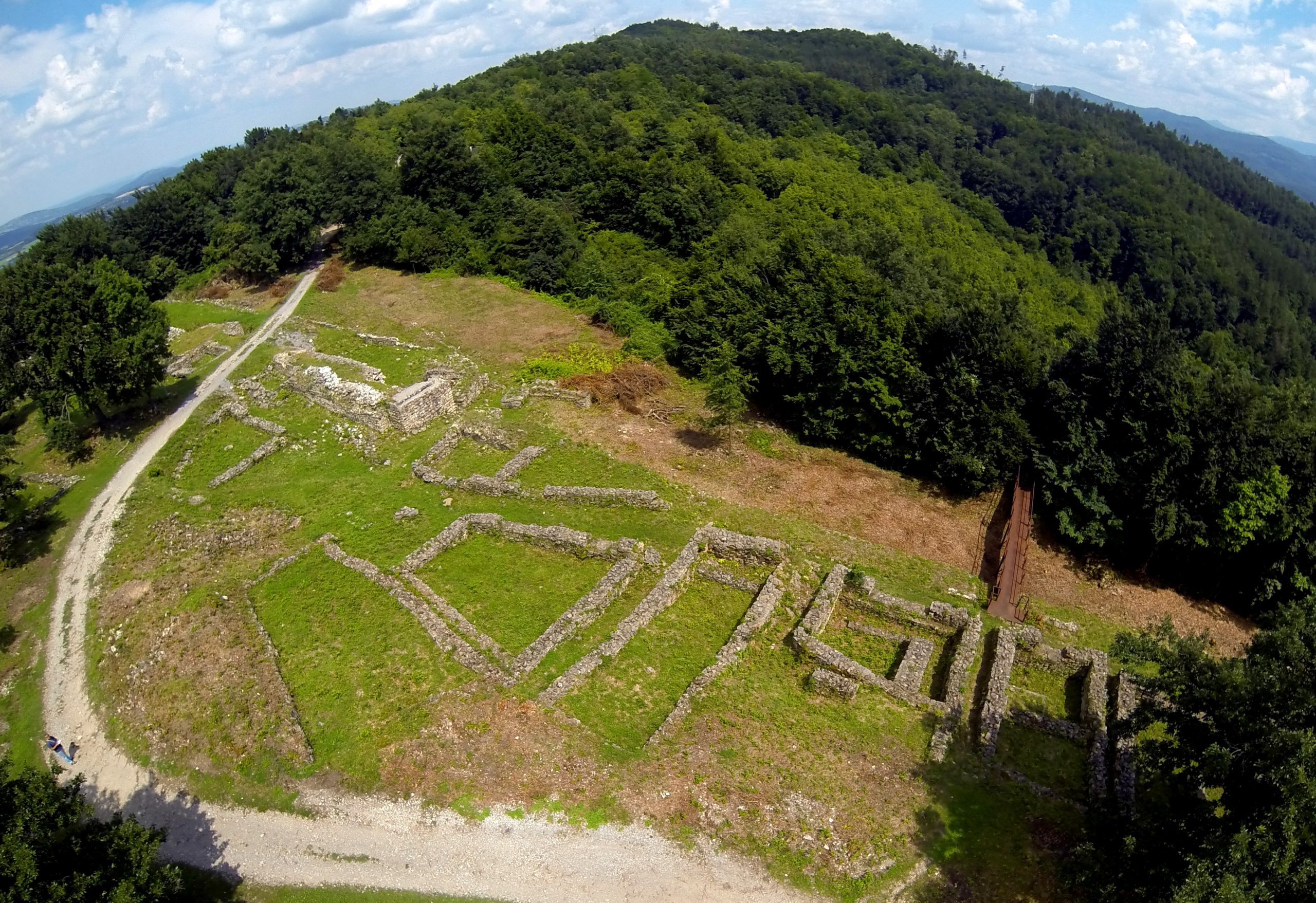
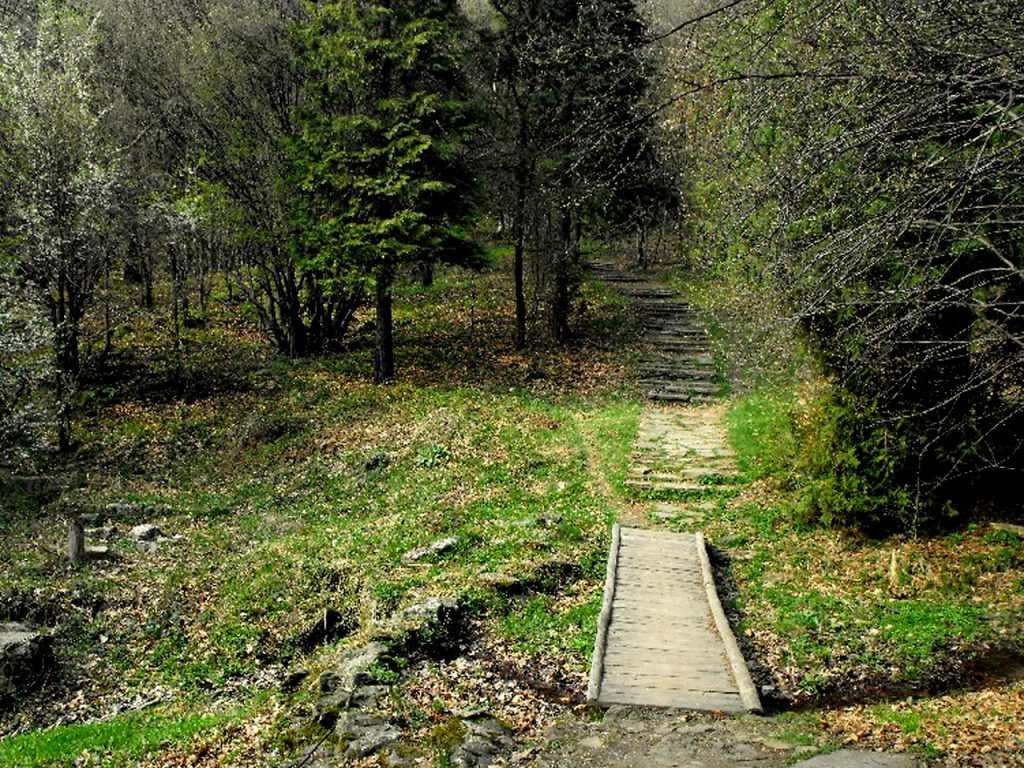
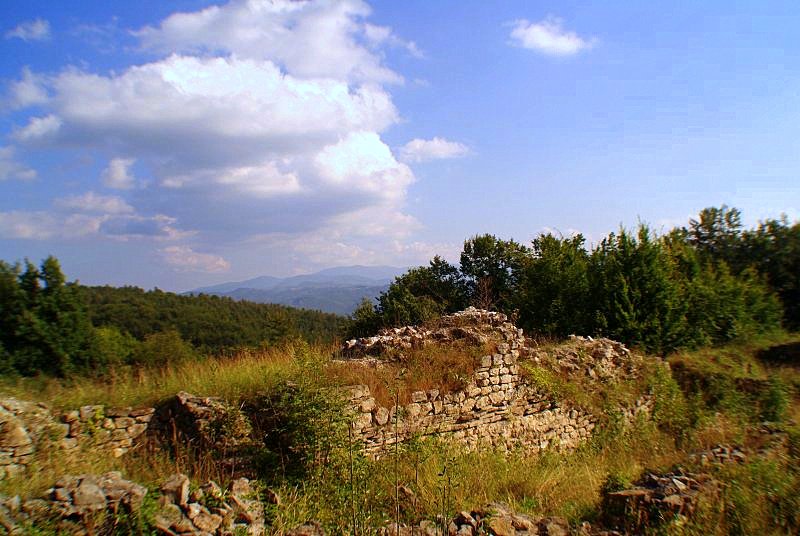
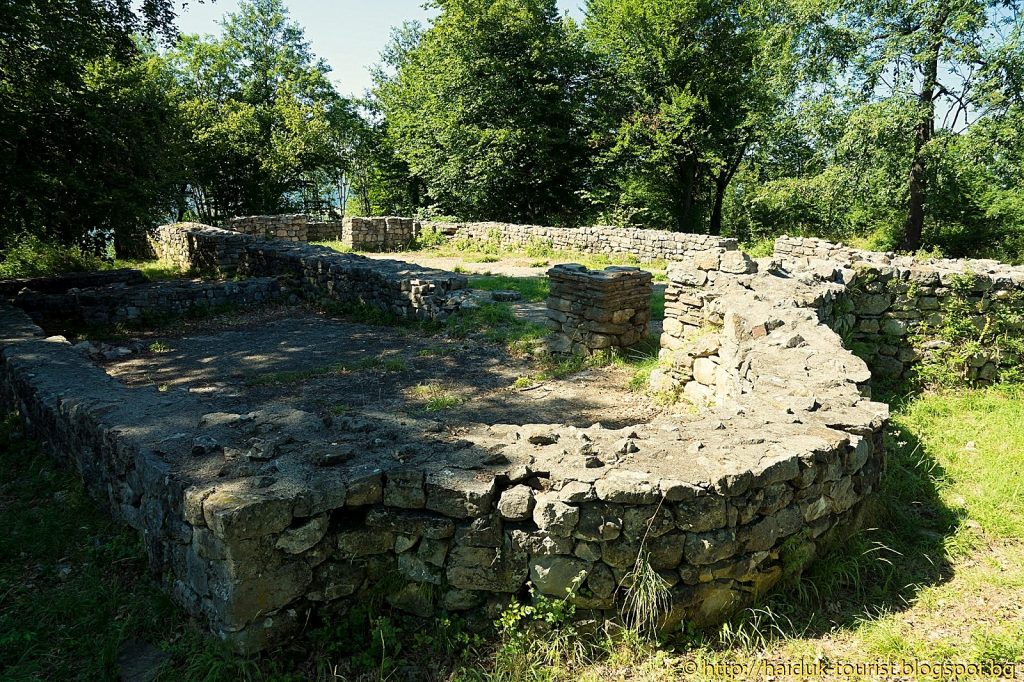
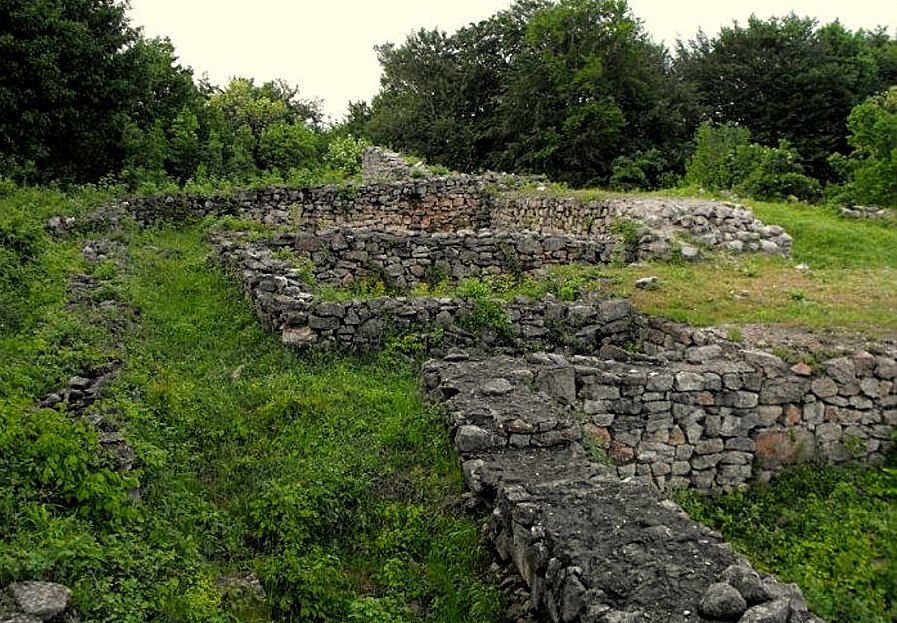
An eco-path leads to the ancient fortress of Gradishte from where the area gets its name. The fortress was a typical settlement for its time with a fortification wall about 4 km long. Archaeological excavations have found the remains of 45 buildings that have been located closely together. Today remains of the fortress wall of the fortress have been preserved, guarding the approaches of the Shipka Pass. There are remains of a church, functioning from the 4th to the 7th century, with crypt, additional chapel from the 5th century and remnants of frescoes. 200 meters east of the fortress are found traces of another church from the VI century and located east of its necropolis.
From the fortress, you can go to the TV Tower from where you can see a great panorama of the city, part of the Vitata wall, as well as Botev Peak.
The Gabrovo Clock Tower is the highest in Bulgaria after the towers in Botevgrad and Bansko. Architecturally, it belongs to the so called Tryavna type. However, the extended proportions of its individual parts is an unusual phenomenon in the Revival construction practice. At its creation, the tower, 27.70 meters high, stood out sharply above the low-rise centre of Gabrovo. Passengers who came to the settlement heard its bell ringing from afar.
As early as the 17th century, clock towers appeared in Bulgarian settlements, and in the 18th century they were already an integral part of their central space. After the burning of Gabrovo in 1798 of the troops of Kapudan Hussein Pasha, only two buildings survived – the old stone bridge (Konashki Bridge from 1749) and the ClockTower. According to the historiographer Dr. Petar Tsonchev, the 18th-century tower was probably not particularly high. Evidence of the existence of a clock tower in Gabrovo in the 18th century is a notebook of Hadji Hristo Rachkov, who in 1799 carefully noted in it that Gabrovo was divided into five neighborhoods, one of which was called “Sahat”, i.e. the neighborhood with the clock.
In 1828, Gabrovians decided to build a new clock tower. In order to avoid unfair competition in craft workshops and commercial shops – for the simultaneous raising and lowering of their shutters under the blows of the “sakhat” (the clock), the place of the clock tower is chosen so that it can be seen and heard from the main street (today’s “Radetska”). In the same year, three wealthy men, “chorbadjii” and the tax collector Georgi agreed with the Kazanlak Turk Hafouz aga for a clockwork worth 2,150 Groschen. But the construction was postponed by several years due to the Russo-Turkish War of 1828-1829. The tower was completed in 1835 with the funds of Gabrovian philistines and the voluntary work of Gabrovian peasants. As it says on its Bulgarian inscription on the western wall – “1835 March 11 this pillar [tower] was erected upon the insistence and by the labour of Gabrovian peasants”. The first traveller to mention the city clock was the Frenchman Ami Boué in 1838, writing about the central “big, very long and poorly paved street” of Gabrovo, in the middle of which “there is something like a square with a lot of shops and a clock tower”. In 1871, the Gabrovo teacher Iliya Hristovich describes the clock tower in more detail, pointing out that “in the very centre of the city, as some guardian, the city sakhat rises high.”
The bell for the watch was delivered from Vienna, as our inscription in Latin faithfully convinces us – “Mich goss Johann Georg Fielgrader in Wien anno 1792”. In his notebook the merchant Rachko Tsankov wrote: “1835 July 1 I completed the tower of the sakhat and raised the chanat [the bell].” The watch did not have a dial until 1901-1902. It only counted the hours by ringing the bell. It was only in the first years of the twentieth century, at the direction of the Armenian watchmaker Mihail Artin Boyadzhiyan the carpenter Mincho Ivanov Kanev developed an additional mechanism for the movement of the hands of the dial, and the ironworker Matyo Ivanov – the iron parts of the new mechanism and the arrows. Gabrovo Clock Tower – this vertical dominant over the urban environment guarded the work of craftsmen and showed their growing economic strength in the future industrial Manchester of Bulgaria. Today it is among the few original witnesses to our bygone times.
One of the favorite places for recreation near Gabrovo is Gradishte. Only 3 km away from the city, the area is a large meadow with a children’s playground, two restaurants, and many recreation areas. The conditions are perfect for a nature outing and sporting outdoor activities with children and friends.
An eco-path leads to the ancient fortress of Gradishte from where the area gets its name. The fortress was a typical settlement for its time with a fortification wall about 4 km long. Archaeological excavations have found the remains of 45 buildings that have been located closely together. Today remains of the fortress wall of the fortress have been preserved, guarding the approaches of the Shipka Pass. There are remains of a church, functioning from the 4th to the 7th century, with crypt, additional chapel from the 5th century and remnants of frescoes. 200 meters east of the fortress are found traces of another church from the VI century and located east of its necropolis.
From the fortress, you can go to the TV Tower from where you can see a great panorama of the city, part of the Vitata wall, as well as Botev Peak.
Gabrovo – the city of bridges
The geographical location of Gabrovo in the valley of the r. Yantra and its constant expansion on both banks, as well as the maintenance of the road through the Shipka Pass, give rise to the natural necessity of developing bridge construction. The Gabrovo bridges are among the wonders of the town and have given Gabrovo one of its nicknames – “The City of Bridges”. Most of them have special architecture and are dedicated to certain events or phenomena, making them unique monuments of culture.
Baev Bridge
Baev Bridge is one of the few preserved Renaissance architectural monuments in Gabrovo. Its construction became imperative when Gabrovo expanded along the left bank of the Yantra River, and because of the idea of moving the Gabrovo (Aprilov) School to a new building (today’s Aprilov High School).
The bridge was built in 1855 by master Mincho Stoyanov, a student of the famous Usta Kolyo Ficheto. The name Baev Bridge comes from the personal name of the owner of the neighbouring mill – Bayo Dermendzhijata.
On the southern parapet of Bayev Bridge there is a stone slab with two inscriptions – Ottoman and Bulgarian. The Ottoman-Turkish inscription is carved on a special marble slab embedded in the stone one.
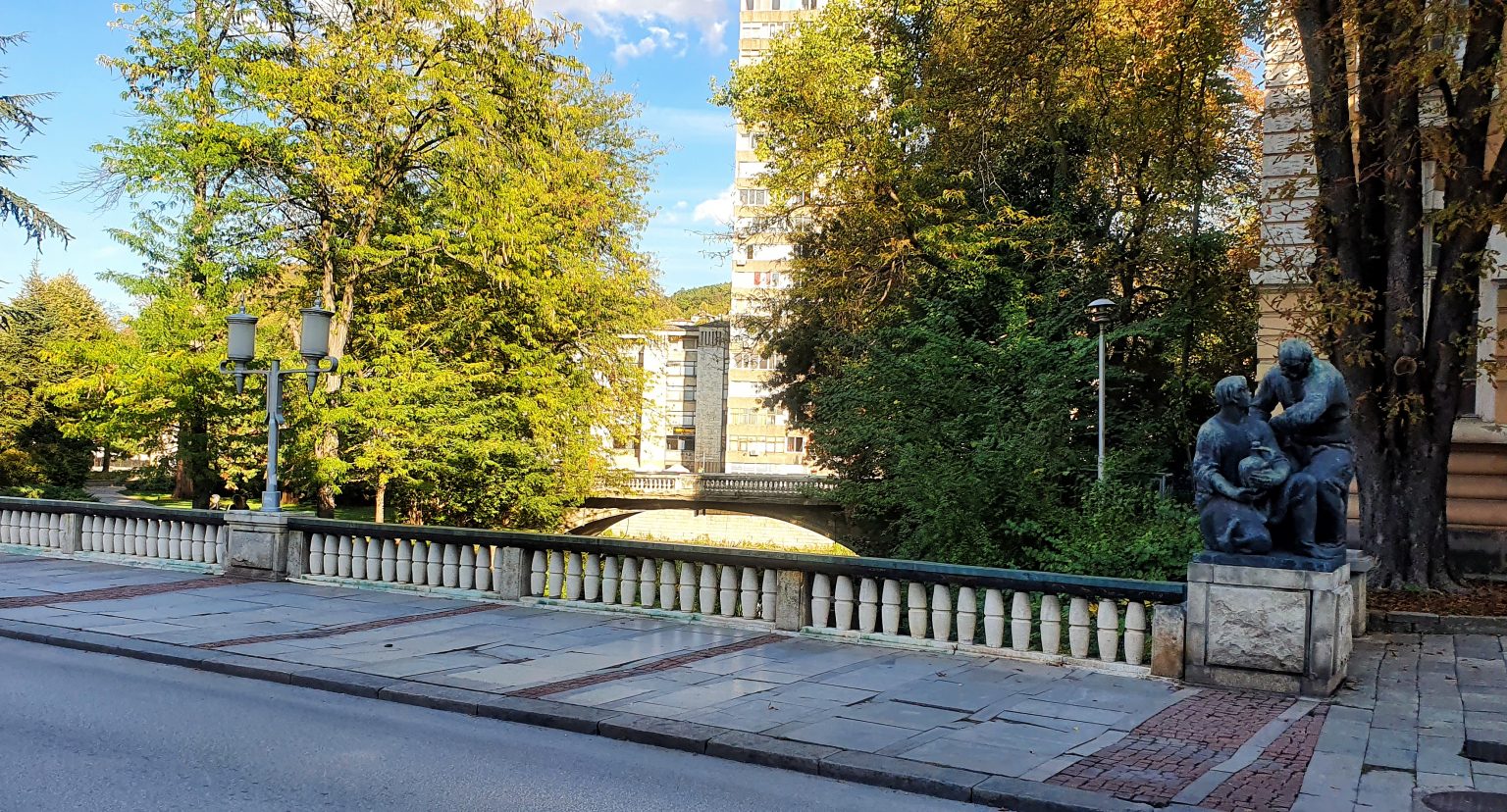
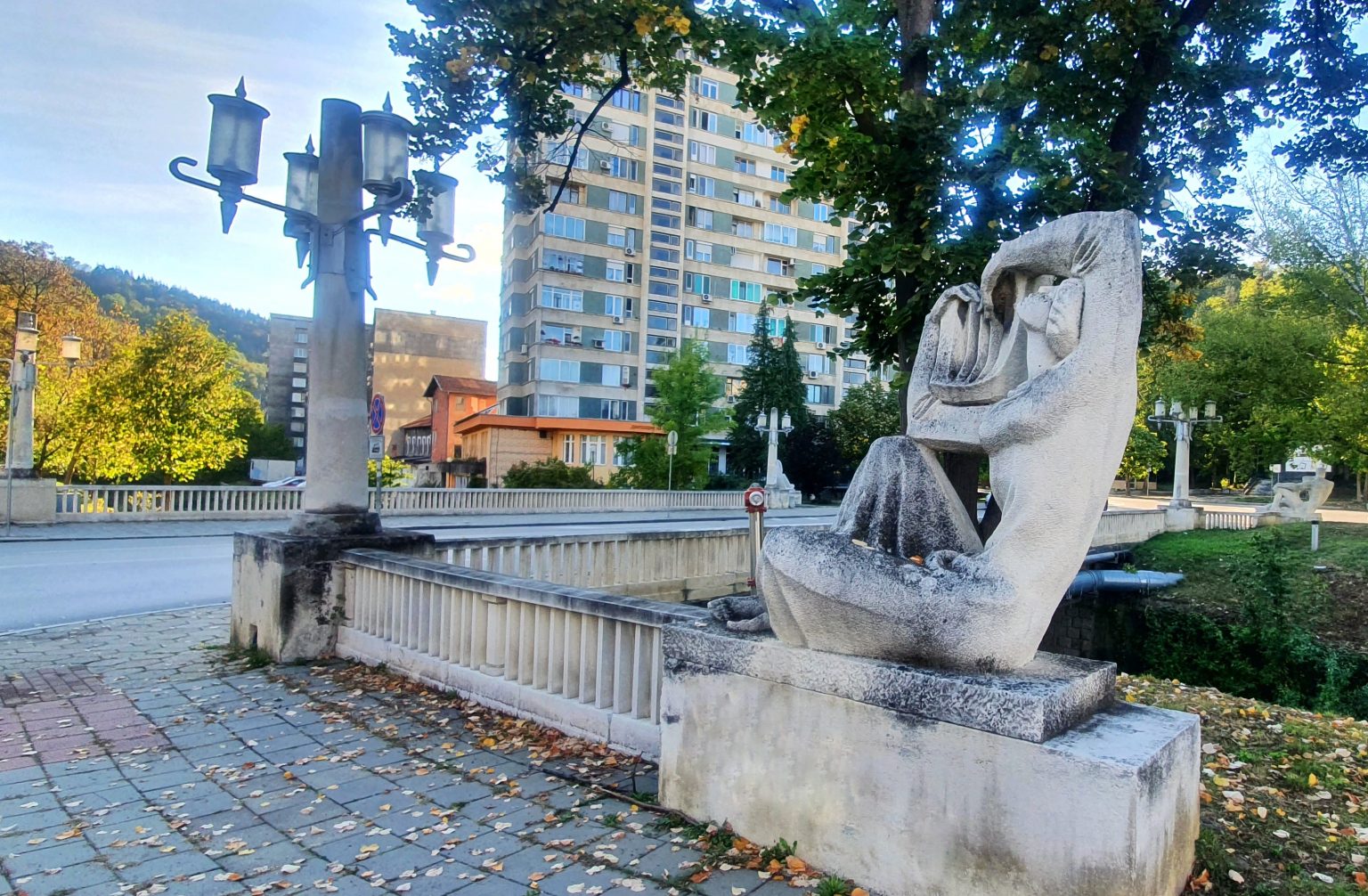
In 1962-1963 a new bridge was built parallel to the old Baev Bridge. In the following years the sculptors Assoc. Iliya Iliev, Dimitar Dimitrov and Boris Gondov from Sofia designed four sculptural compositions on the theme of Rebirth. In 1968, three of them were placed on the bridge, which was named “The Bridge of Revival”. These are the sculptures “Apriltsi”, “The Wounded Insurgent” and “The Schoolwork in Gabrovo”.
The Igo Bridge
The oldest stone bridge in Gabrovo was built in 1749 at the Gramadata rocks, when traffic on the Gabrovo-Sevlievo-Lovech-Pleven-Vidin road was intensified. The date of its construction was inscribed in Cyrillic on a plaque erected in the middle of the left ledge of the bridge. This slab collapsed during the great flood of 1897.
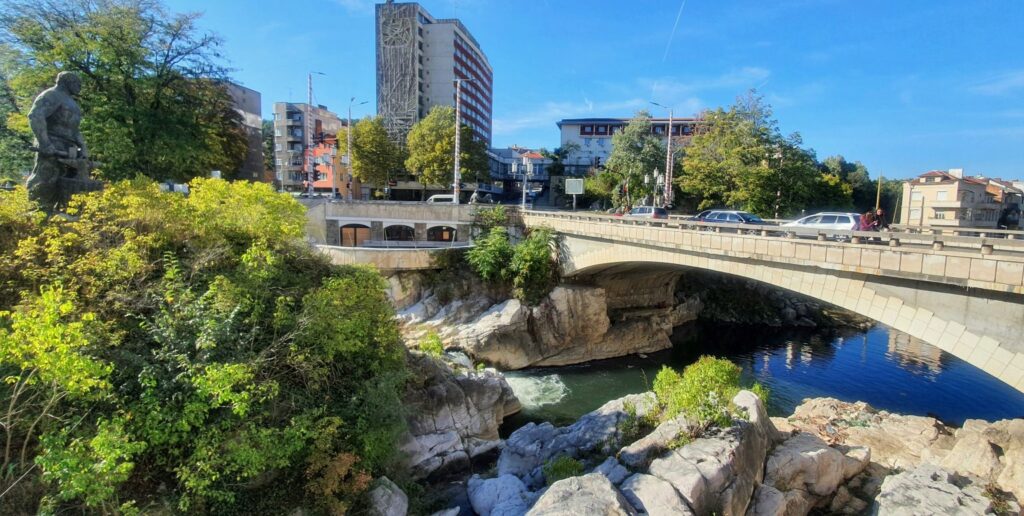
The construction of the new Igo bridge began in 1935 during the last term of Gabrovo mayor Ilija Kozhuharov. Its construction was completed in a very short time and was necessitated by the need to replace the inconvenient for modern transport Konashki Bridge. Then the rock at the bridge, where the waterfall Gramadata was located, was also broken.
The sculptural figures “Bulgaria in chains” or “Bulgaria under the yoke” (female figure), “The chain is broken” (male figure) and “The invincible Bulgarian spirit” (lion figure) from the bridge “The Yoke” were created by prof. The sculptor is the brother of the famous Bulgarian poet Atanas Dalchev. Another of his works in Gabrovo is the statue of Racho Kovacha near the bridge.
The bridge “The Igo” has one arch and wide railings. At the right end of the upper railing is a sculpted rampant lion; at the right end of the lower railing is a statue of a prostrate naked man breaking the chain of slavery, and at the left is a half-reclining naked woman writhing in the chain of slavery”.
Shivarov Bridge
The predecessor of the Shivarov Bridge was built in 1788. This is the so-called Kamenski Bridge or “Shipka”, the second bridge over the Yantra after the Konashki Bridge. At that time Gabrovo had not yet reached this area with its houses, but its construction was necessitated by a change in the route of travellers to the Balkan.
After 1878, the Shipka Bridge became more popular among Gabrovians as the Shivarov Bridge in connection with the warlord and innkeeper Dimitar Shivarov. His house with a saloon-drinking room for banquets, performances, dinners, etc. was located near the bridge. The surname Shivarov is derived from “shavar”, marsh grass.
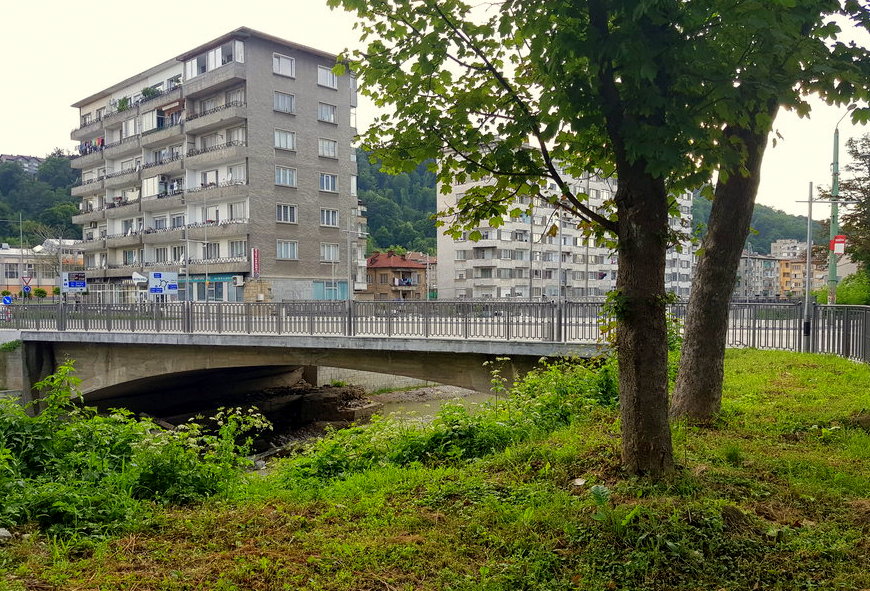
And this ancient monument of Gabrovo no longer exists. Today’s Shivarov Bridge was built in 1967. Due to its proximity to the Hristo Botev Stadium, it is architecturally shaped as a bridge of sports by the sculptures of prof. Ilia Iliev, Dimitar Dimitrov and Boris Gondov.
Gruncharski Bridge
The Grunchar Bridge on the r. Sinkevitsa was built after the Liberation. Its name derives from the Grunchar neighborhood through which the bridge passes. In 1959-1960 the old and humpbacked bridge was reconstructed and widened. In the following years, four sculptural compositions were made and placed on the bridge in 1965 – “Textile Workers” (by Mladen Miladinov), “Leather Workers” (by Dimitar Dimitrov), “Potters” (by Velichko Minkov) and “Builders” (by Vasil Radoslavov). The figures represent the main economic sectors that were developed in Renaissance Gabrovo, which is why the bridge was named “Bridge of Crafts”.
Borovo Bridge
The Borovo Bridge over the Sinkevitsa River was built after the Liberation. Subsequently, a new one was built on its place, known as the Bridge of Arts due to its proximity to the House of Culture and the Summer Theatre. The sculptor Velichko Minekov made the four white stone figures – the Muse of Music, the Actor with a Mask in His Hand (Theatre), the Two Dancing Maidens (Handmaiden) and the Fertility.
Footbridge
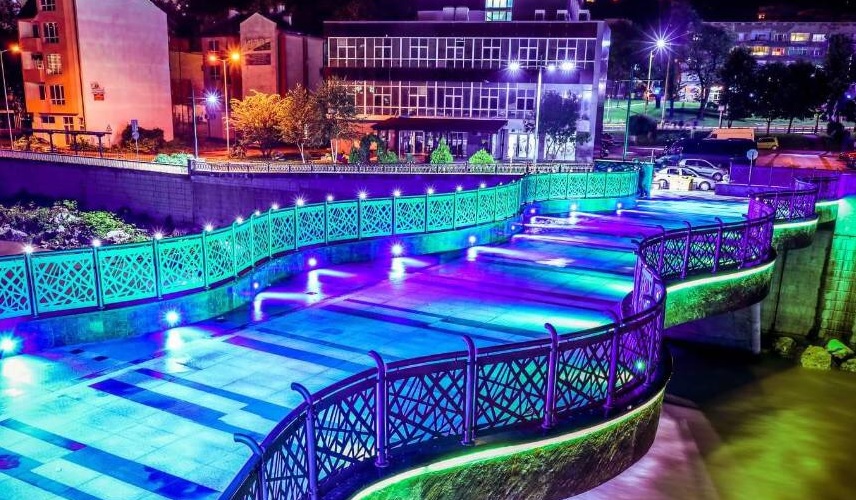
The newest addition to Gabrovo’s famous bridges was completed in 2018 and jokingly named by Gabrovians – the Curly Bridge, because of its specific shape. The bridge is pedestrian and connects the two riverside areas, which offer places for recreation and playgrounds for outdoor sports. Its modern look is also reinforced by the decorative LED lighting, which impresses those passing by in the evening.
Monument of Racho Kovacha (“Racho the Blacksmith”)
The symbol of the enterprising spirit – the monument of Racho Kovacha, was erected on the rock next to the bridge “Igoto” (“The Yoke”) designed by the sculptor Lyubomir Dalchev in 1935.
Racho Kovacha is a mythical figure, a character of one of the legends about the founding of the town of Gabrovo. The Gabenski brothers say that Racho Kovacha was a blacksmith from the village of Bozhentsi, who every morning went down from his village to “Izvora” in the Kamaka area, along the road from North to South Bulgaria. There he had a forge and shoed the horses of the travellers.
Even if it is not a distant echo of the real personality of the first settler, the legend of Racho Kovacha confirms the strong presence of the blacksmith craft in Gabrovo over the past centuries. The blacksmiths also have their own neighbourhood – in the area of today’s Nikolay Palauzov Street.
In every city’s history, there is always more than one local landmark associated with local stories or legends. These stories tell about personalities, landmarks, and memories of long-gone times.
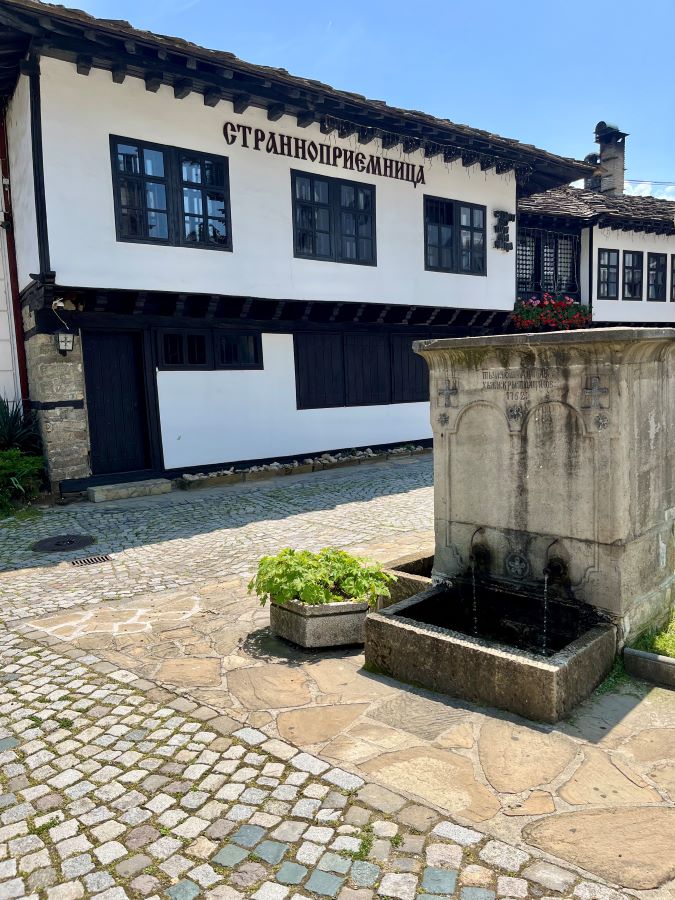
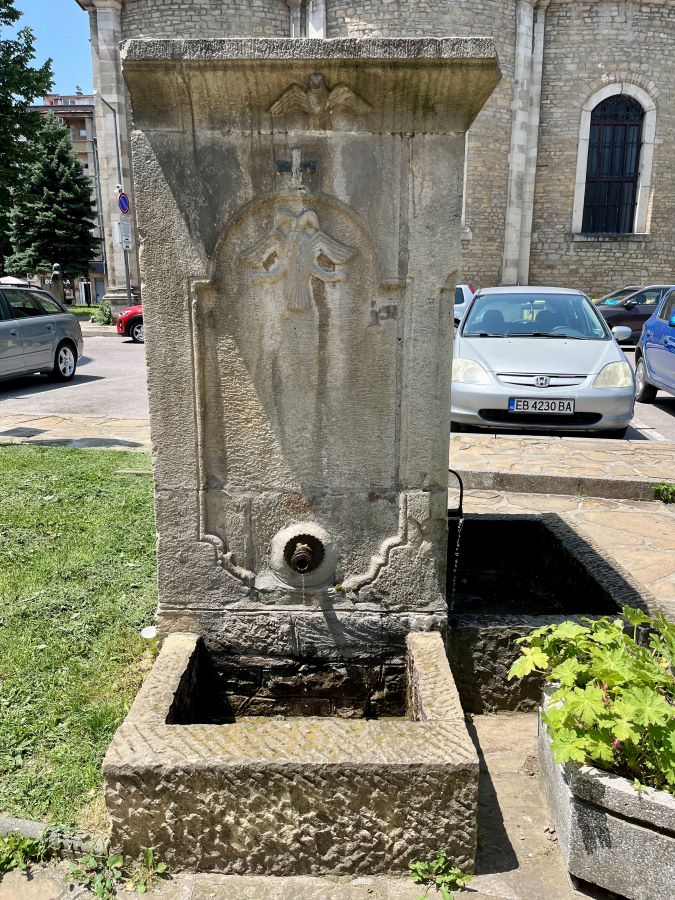
And here in Gabrovo there is a special landmark that you must definitely visit if you come to the city. The fountain, built in 1762 by Hadji Krastyu Aprilov, a relative of the great Vasil Aprilov, the founder of Bulgarian education. They say that it is the oldest architectural monument in the city and is a unique testimony to the craftsmanship and culture of its time.
This corner fountain was built in a wonderful place, namely in the middle of the so-called “Sixth District”. The quarter in which in the past the most turbulent guild and artisan life was boiling, and in the evening the local pubs were filled with cheerful noise and bustle. According to history, the master decided that it was here that running water was most needed and rolled up his sleeves. They also say that he built the fountain with one spout to the east for shy girls who came early in the morning for water and two to the north, for those who would come later for a chat and a joke. In the period after the Liberation, it was built into the wall of the courtyard of a local house for a while. At first glance, it looks quite ordinary, made of ordinary stone and sandstone slabs, but its true wealth lies in the decorative elements. In the past, it had many elements: pigeons, rosettes, crosses, and a two-headed bird, only a part of which has been preserved to this day. The master did not accidentally place the two-headed bird because it symbolizes national pride. Equally interesting are the copper-forged spouts with handles on top, which are a true masterpiece of blacksmithing. They say that by grabbing onto them, it was easier to lift the heavy pitchers full of water.
Although time has erased some of these ornaments, the fountain of Hadji Krastyu Aprilov remains an impressive testament to the past. Visit it and immerse yourself in the history of Gabrovo, where every pebble tells its own story.
The Monument to Alexander Kerkov
Tribute to the Pioneer of Fanfare Music
If you walk along the pedestrian zone in Gabrovo, you will notice a very interesting bench with a man sitting on it. Children jokingly ask if this is McDonald’s and why it looks so different here. This is the monument to Alexander Kerkov – one of the most remarkable musicians and pedagogues in the musical history of Bulgaria. Created with love and appreciation in 2021, this monument represents a musician with a thoughtful face and a lively smile, sitting on a bench with a fanfare in his hands. The composition embodies the spirit of Kerkov and his contribution to culture and education.
Alexander Kerkov, born in 1901, was the first composer of fanfare music in Bulgaria and a music educator who dedicated his life to children and the younger generation. He established as many as ten fanfare schools, composed fanfare music and founded the first dance orchestra in the country. His unique talent was expressed in the creation of his own sheet music adapted for fanfare music, on which he composed arrangements of marches, kits, potpourri, concert waltzes, choruses, handbell dances and other works, which today are preserved in the golden treasury of Bulgarian music.
Besides being a serious musician, Kerkov remains famous for his endless jokes and sense of humour. He was also the main organiser of the Gabrovo Merry Theatre. His sense of humour and love of art made the lives of his fellow citizens more colourful and joyful.
In 2018, the Women’s Charitable Society “Mother’s Care” – Gabrovo, launched an initiative to make and exhibit a sculptural figure of Alexander Kerkov. For three years, the Society has been raising funds for the construction of the monument. In 2020, thanks to the support of the Culture Programme of the Gabrovo Municipality, local businesses, the Gabrovo Before and Now Foundation, the Gabrovo Public Endowment Fund and the America for Bulgaria Foundation, the funds were raised and the project realised.
The sculptor Georgi Balabanov, a former student of Kerkov in the fanfare music of Vasil Levski Primary School, was chosen as the author of the composition. For Balabanov, Kerkov was “the perfect music teacher who dedicated his life to children”.
The monument to Alexander Kerkov not only pays tribute to his musical achievements, but also to his deep connection with Gabrovo and its inhabitants. It is a place where you can experience history and be inspired by the life of an extraordinary man who left an indelible mark on Bulgarian musical culture.